
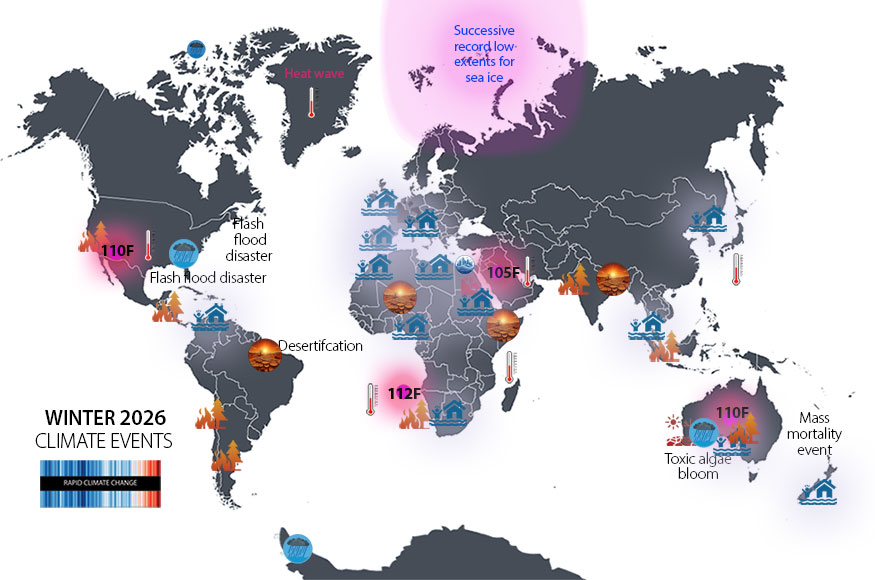
March The largest wildfire in Nebraska history continues to burn out of control | Massive methane leaks spew massive quantities of the most potent greenhouse gas into the atmosphere | Arctic sea-ice extent sets another record daily low extent, about 1700² miles less than previous record, set 2025 | Arctic Sea ice is also continuing to set new record low thicknesses | Authorities in Tripoli have declared Tuesday a public holiday within the municipality after heavy rain and strong winds caused flooding across parts of the city. | Sea level rise is accelerating around African coastlines, at rates averaging .15 inch / year | Flash Floods Claim 66 Lives as Kenya Reels from Torrential Rains | March 17 Death Toll from Ethiopia Landslides Rises to 125, Thousands Displaced | The driest spring in four centuries in the Western Himalayas | Rare tornado kills 2 in Odisha’s Mayurbhanj district, India – but not really that rare these days | Thick smoke from Riau forest fires disrupts Hari Raya travel for Indonesians | March 10 Maui was deluged by record rains, with one location reporting 46 inches of precipitation |March Babahoyo, Ecuador recorded at least 11 dead from unprecedented floods and landslides | McAllen, Texas hit a new March record of 110°F – it’s still Winter | More than 420 counties in the Western US had their warmest December–February periods on record. | Climate scientists are predicting a “super El Niño” forming later this year, which would pump up the already accelerating warming emergency. | New feedback cycle: Arctic peatlands have reversed

Phoenix smashing spring heat records with 108°F
Phoenix, AZ, is experiencing an unprecedented early heat wave, with all-time daily high temperature and overnight low records shattered during the last week of winter and early spring. Phoenix will see temperatures exceed 100°F for five consecutive days, peaking at 108°F. Phoenix’s average overnight low is typically 52°F and the average high is 77°F.
The alarming heat wave also blankets California and Nevada.

Record Nebraska wildfires outbreak turns lethal

Arctic sea ice extent hovers at long time record low
Daily sea ice extent has been at or close to the lowest on record (since 1978-79) since early November. Total sea ice extent in the Arctic remains flat, with the sea ice index continuing to maintain the lowest or second lowest extent since measurement began.
Sea ice extent means the total area covered. In this case, it means that ice growth during northern winter is consistently slowing.

Africa cassava crops threatened by disease
Cassava is facing a critical threat from viral diseases, especially Cassava Brown Streak disease – which is causing up to 100% yield losses. The disease is spread by white flies, which are in turn are increasingly rapidly in number and range due to global warming.
These diseases threaten food security for millions in Africa, with CBSD spreading westward and causing root necrosis that often goes undetected until harvest.
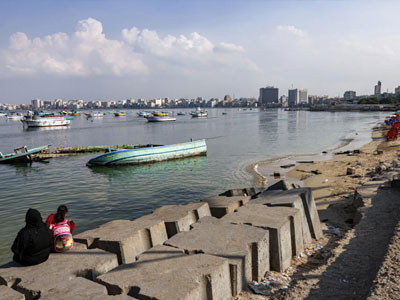
Iconic Alexandria, Egypt inundated by rising seas
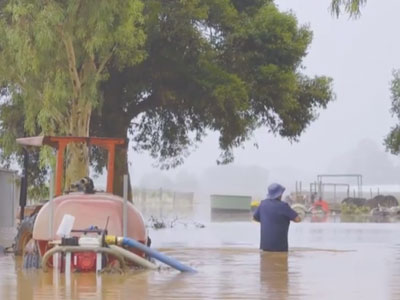
Record climate whiplash events in Australia
Following weeks of 122°F temperatures, some areas in Victoria and Queensland received more rainfall in a week than in all of last year.
The deluge is causing havoc across Australia, with South Australia on flood watch, Victoria cleaning up after a downpour, and Sydney issuing a shark warning after heavy falls.
South Australia western Victoria and parts Victoria received more than double their average February rainfall overnight. Sustained rain in Sydney over the last few days led to official warnings that murky water conditions can increase bull shark activity.
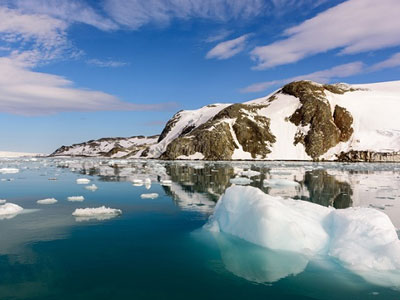
Beautiful day for a rain storm in Antarctica
Rain used to be rare in Antarctica, but this norm is beginning to change. Rain is already falling more frequently on the mountainous Antarctic Peninsula, which spins north off of the mainland toward South America. Already the warmest part of Antarctica, the Peninsula is warming faster than the rest of the continent, and far faster than the global average. It provides an advanced sign of what coastal Antarctica – especially the fragile West Antarctic Ice Sheet – will experience in the coming decades.
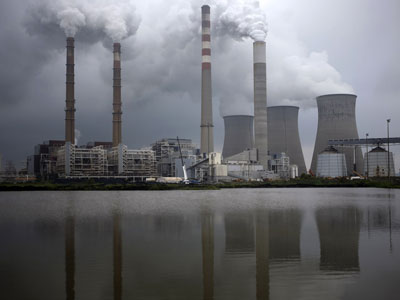
TVA re-embraces coal, ditches renewables
If you were clinging to hope that humanity was going to head off certain catastrophic climate disaster, kick the fossil fuel habit and implement renewable energy on an emergency basis, feel free to lose that hope. The storied (for better or worse) Tennessee Valley Authority – the nation’s largest public utility – has bent the knee to the Trump administration and its fossil fuel overlords, keeping coal fired plants open even as the operators try to close them.
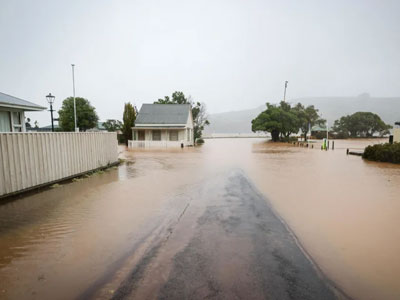
New Zealand inundated with 6 times yearly rain
Banks Peninsula was been hammered by 12 inches of rainfall in just 48 hours during late February. The peninsula is part of the regions that includes the capital, Christchurch.
The deluge has left the peninsula cut off, with slips and flooding blocking the main road between Christchurch and Akaroa.
A state of emergency remains in Banks Peninsula, about 250 properties have been without power overnight, and there are also cell and internet outages.
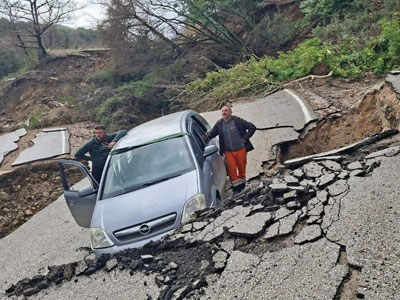
Greece slammed by storms and landslides
Heavy storms have cause widespread flooding, landslides, and road collapses across western and northern Greece, including record rainfall in Corfu.
Greece is facing severe weather across multiple regions, with unprecedented rainfall, flooding, and landslides affecting western and northern parts of the country. Authorities have issued warnings as roads and infrastructure sustain serious damage.
A coastal road in Arilla split in two, isolating businesses and tourists. Continuous heavy rainfall has destabilized slopes, with rocks and soil falling continuously. The estimated rainfall equates to roughly 2,300 tons per hectare, overwhelming local infrastructure..
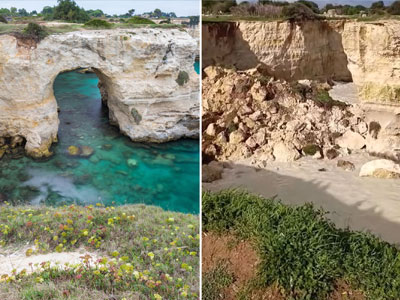
Global Warming comes for Italy’s Love Arch
The famous Love Arch natural rock formation on the Puglia coast of Italy collapsed on Valentine’s Day after more record storm surges and heavy rain swept the region.
The rocky arch, one of the best-known natural landmarks on the Adriatic coast, was a backdrop for wedding proposals, selfies and postcards.
Elsewhere in the region: In Sicily, a landslide smashed houses fall into a ravine in Niscemi. Widespread flooding killed several people, including a man who died when his home collapsed near Rome last week.
While coastal erosion is an ongoing natural cycle, rising seas around the globe are claiming more and more land, from North Carolina to England’s White Cliffs of Dover.
Global Warming comes for your latte
It has long been our contention that Joe Citizen won’t actually understand the global warming emergency until it affects their favorite habit. And here we are:
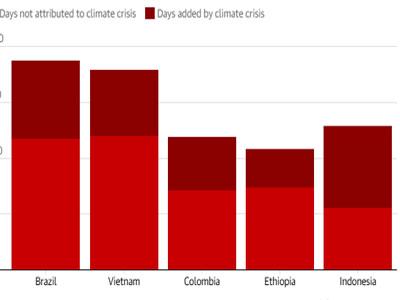
The top five coffee-growing countries, responsible for 75% of the world’s supply, experienced on average 57 additional days of coffee-harming heat annually because of the climate crisis, according to the findings of Climate Central, which researches and reports on the crisis.
Systematic destruction of climate science
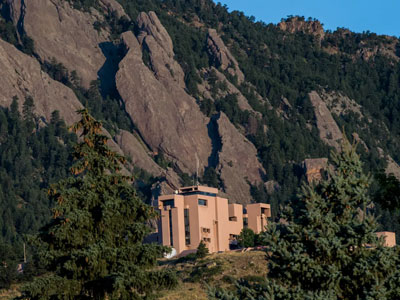
Few people will ever hear this story: The U.S. National Science Foundation said on Thursday that the management and operations of a supercomputer used by more than 4,000 climate and weather scientists across the country would be transferred from a leading research lab to an undisclosed third party. Story in New York Times.
El Salvador declares wildfire emergency
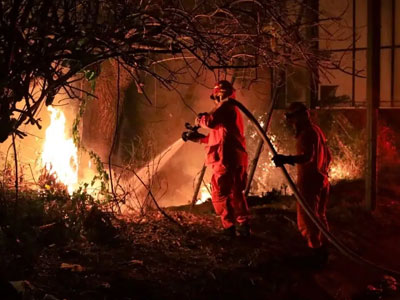
The government of El Salvador declared a national emergency after counting 625 fires so far this year, a significant increase compared to the 412 recorded in the same period last year.
It won’t stop raining in Italy
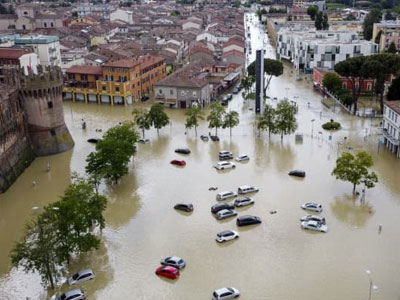
Persistent bad weather has dogged the whole of Italy since the start of 2026, with storms causing huge damage and disruption.
Rome itself has seen near-daily downpours in February after a record amount of rain in January.
Further south, the Calabria region has asked that a new national state of emergency be called after days of heavy rains pounding the area caused flooding and mudslides, authorities said Saturday
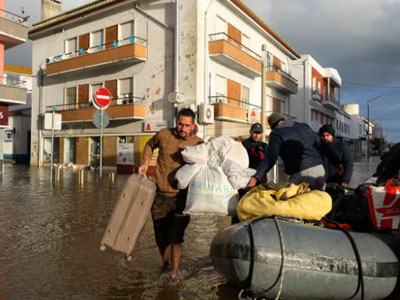
Portugal: killer floods and mass evacuations
At least 15 people have died in Portugal, as weeks of fresh flooding forced the evacuation of around 3,000 residents, triggered the collapse of a motorway, and led to the resignation of the interior minister.
Heavy rain caused a levee on the River Mondego to burst undermining a pillar supporting the A1 highway that links Lisbon and Porto. A section of the road gave way..

Warming will finish off right whales
After decades of recovery, southern right whales are showing a breeding decline driven by global warming and its affects on the Southern Ocean. Ironically, the mammoth marine species had been in a slow recovery after being hunted to near extinction by commercial whalers. Looks like humans will finish them off one way or the other.

Detectable acceleration of planetary warming
Global temperatures have been rising for decades. But ongoing research confirms what scientists have been saying: it’s now happening faster than ever before.
In the last few years, something changed. 2023, 2024 and 2025 were far warmer than the previous trend.
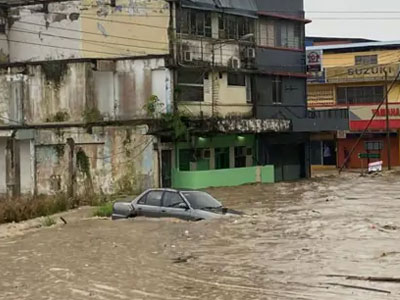
Catastrophic flooding in Malaysia kills dozens
Lahad Datu were hit by flash floods after more heavy rain in early February as vehicles were swept away by strong currents, along with a wooden stilt house reportedly carried off by floodwaters..
.
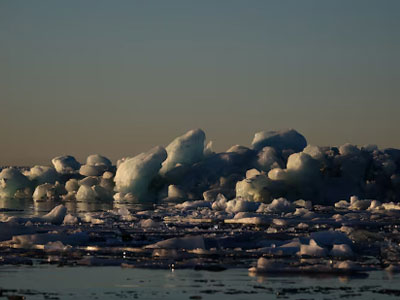
Greenland logs hottest January ever recorded
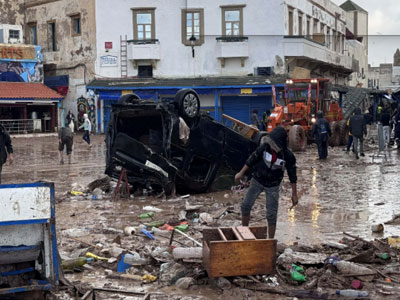
Torrential rains in Morocco: 143,000 evacuated
More than 140,000 people were evacuated in northwestern Morocco as heavy rainfall and dam releases led to catastrophic flooding.
Temporary shelters were set up and the army was deployed to evacuate residents from the hardest-hit towns.
The North African nation is currently facing a “climate paradox” characterized by record-breaking droughts followed by unprecedented, destructive flooding.
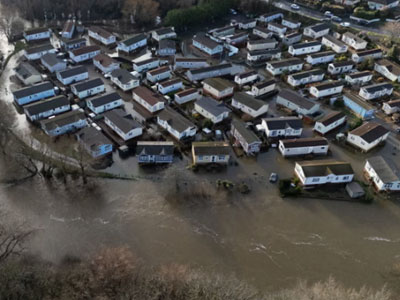
Storm Chandra smashes SW England and Ireland
Evacuation and “Danger to Life” warnings were issued in southern England and Cornwall as a destructive weather event slashed through the British Isles.
Severe flooding also hit parts of Dublin, and elsewhere on the east coast on the east coast of Ireland. Although bomb cyclones are becoming much more common, the citizenry was poorly prepared for the onslaught.
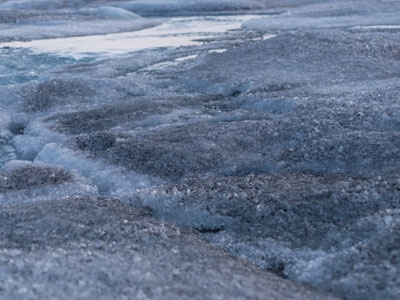
Algae blooms accelerate Greenland ice melt
Global warming is increasing the growth of algae in Arctic regions, but especially in southwest Greenland. The red, brown and green algae hasten the already rapid collapse of the ice sheet in two ways. The presence of the growth melts the ice directly, and also reduces albedo, the ability of ice and snow to reflect heat back into the atmosphere. This phenomenon is represents yet another feedback system that feeds on itself to speed up the climate emergency.
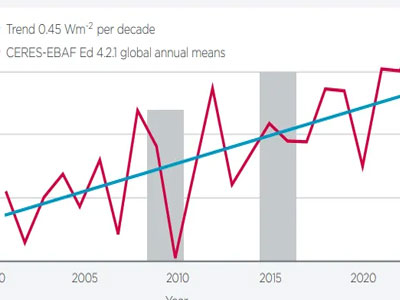
Earth is absorbing heat energy at frightening rate
The Earth’s Energy Imbalance (EEI) has doubled in recent decades. In early 2023, the rate of solar energy absorption was equivalent to every person alive on Earth continuously boiling 60 kettles. Since 1971, the Earth has accumulated 500 times more energy than the world’s total primary energy consumption in 2024. 93% of this heat is currently being stored in the oceans, a thermal debt that will eventually be paid.
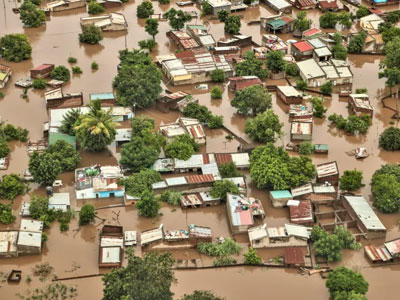
Floods displace hundreds of thousands in S. Africa…
Record floods have displaced hundreds of thousands and killed over 100 in South Africa, Mozambique and Zimbabwe. Lack of food and cholera are threatening much of the region. According to officials in Mozambique, at least three people have been killed by crocodiles that were washed into area rivers.
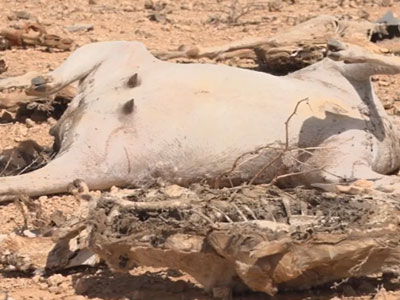
…While eastern Africa suffers record drought
Communal graveyards are filling with livestock as animals and people die in the throes of a relentless drought covering the Horn of Africa. With several rivers dry, water has to be brought in every week from aid agencies. Some communities got water once a week. The drought began in July 2025 and shows no sign of lifting.
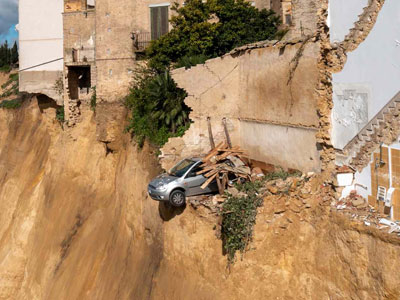
Scale of cliff landslide in Sicily is staggering
A 1.5 miles long section of cliff collapsed suddenly after southern Sicily was pounded by Cyclone Harry, a particularly violent weather event. About 1500 people have been evacuated and many no longer have homes to return to. Buildings and cars slid down about 180 feet to the plain below while many other homes remain perched perilously on the cliff edge. Total damage is expected to exceed 2 billion Euros.
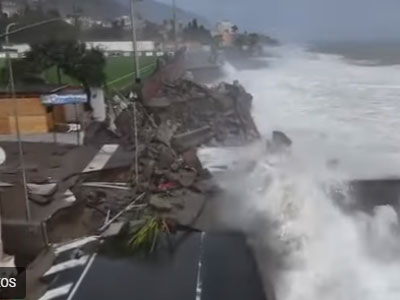
Record 52′ wave: devastating Italian storm
Cyclone Harry laid waste to a wide swatch of the southern Italy, including Sicily and Sardinia. A 52 ft tsunami like wave hit smashed the coast, the biggest every recorded in the Mediterranean Sea. Sicily alone is estimating $1 billion in damage to infrastructure, homes and the essential tourist economy. Extreme waves and torrential rain battered its eastern Ionian coast.
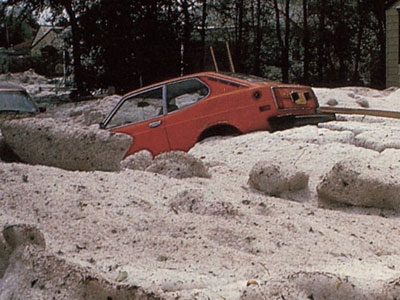
Munich Re warns of increasing hailstorms
When the largest reinsurance company issues a warning, it’s not because they are in the business of climate alarmism. They are the people who pay for this mess. Munich Re warns that hailstorms are increasing in severity and frequency, posing major risks to property, particularly in Europe and the US. Recent studies indicate a 30%–40% rise in severe hailstorms in Europe by the century’s end, with significant increases in insured losses..
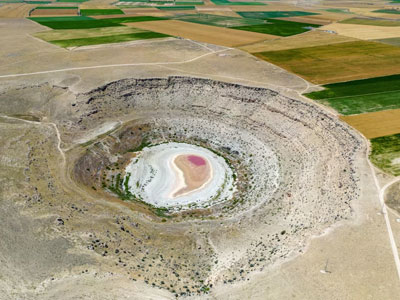
Irreversible global water shock now
The world has entered “an era of global water bankruptcy” with irreversible consequences, according to a new United Nations report.
Kabul may be on course to be the first modern city to run out of water. Mexico City is sinking at a rate of around 20 inches a year as the vast aquifer beneath its streets is over-pumped. In the US Southwest, states are locked in a continual battle over the how to share the shrinking water of the drought-stricken Colorado River.
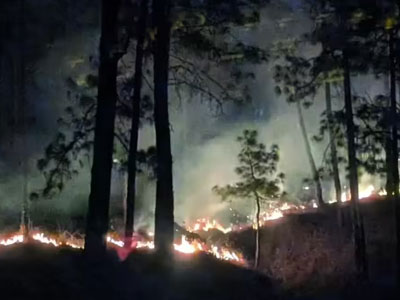
Wildfires in India and Kashmir
Wildfires continue to burn rage for days in Kashmir’s Zabarwan Hills as rising temperatures, dry winters and forest vulnerability expose the growing impact of climate change on fragile Himalayan ecosystems.
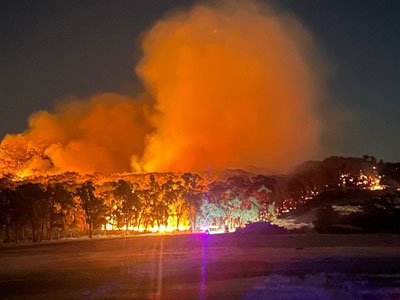
Victoria, Au terrorized by major wildfire event
A State of Disaster was declared as a fast-moving bushfire scorched 741,000 acres in Victoria State. Hundreds of structures have been destroyed, and thousands remain under evacuation orders.

2025 Chile wildfire disasters continue in 2026
Nineteen are dead in Chilean wildfires as the government carried out mass evacuations and fought nearly two dozen blazes exacerbated by intense heat and high winds.
Parts of central and southern Chile were under extreme heat warnings, with temperatures expected to reach up to 100°F.
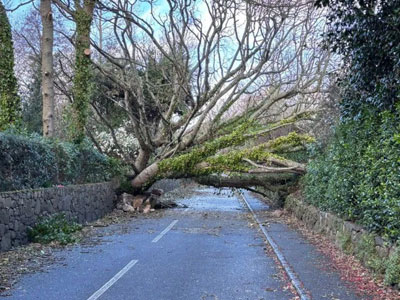
Channel Island superstorm rips out 1000’s of trees
Still recovering from 2023 Storm Ciaran, the small Channel Island of Lihou was slammed again by mega storm Goretti with winds of 95MPH. Thousands of trees were uprooted and major damage to buildings and infrastructure was documented. Incidents of catastrophic weather events in the North Atlantic continue to rise.
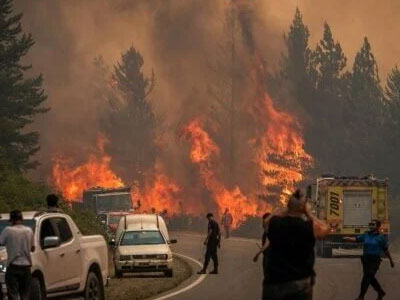
37,000 acres burn in Patagonia as fires spread
More than thirty wildfires ripped through Chile, killing 19 and burning more than 135 square miles and hundreds of homes.
Across the Argentine border, fires have torched sixty square miles, including homes and native forests.
The two countries are in the middle of an extended heatwave as high winds have supercharged the spread of fires through dry native vegetation and forest plantations.
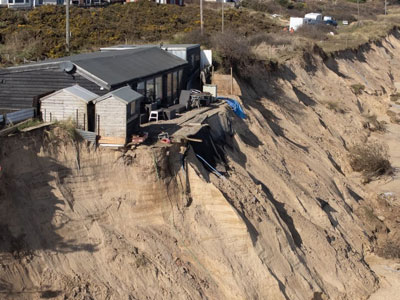
Cottages demolished as UK coastal erosion worsens
The cliffs of Norfolk and Suffolk are among the fastest-eroding coastlines in northern Europe. While it has been natural processes — wave action, storms, tides, and weird geology— that have caused coastal land to gradually slip into the North Sea – the current rapid acceleration is due to sea-level rise and increasingly frequent and violent storms driven by global warming.
In mid-January, thousands of trees were destroyed in the Channel Islands by another massive storm as winds reached 95mph.
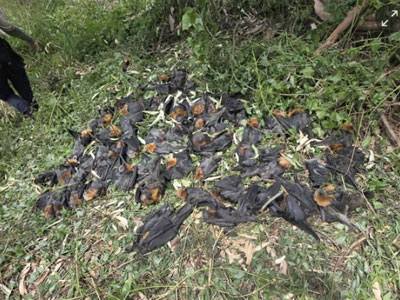
Australian heatwave brings mass flying fox die off
A major Australian die off of flying foxes echoes similar horrific events during the Black Summer of 2020. Temperatures reached 110°F for several days in early January in South Australia, including Sydney. This temperature is at the threshold of what these and other animals are able to survive, meaning these mass mortality events will likely continue as the planet heats. At the same time, a State of Disaster was declared as a fast-moving bushfire scorched 741,000 acres in Victoria. Hundreds of structures have been destroyed, and thousands remain under evacuation orders.
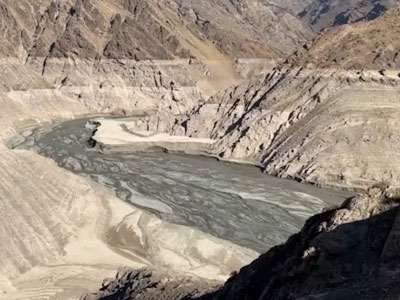
Tehran joins global capitals running out of water
The extreme unrest in Iran is partially driven by an impending national catastrophe as the capital taps begin to run dry in the face of a relentless climate driven drought. Major dams supplying the city have fallen to extremely low capacities, some below 1.0%.
The “Day Zero” threat is shared by Cape Town, Mexico City, Bangalore, Ankara, Beijing, São Paulo, Cairo, Jakarta and dozens of other major megacities around the world.
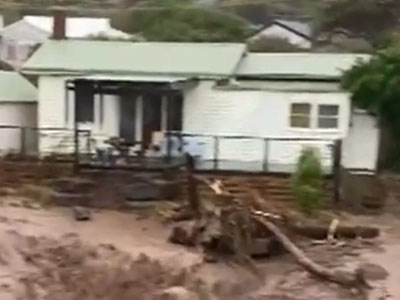
Climate hydrowhiplash in Australia: flood | wild fire
Australia’s iconic Great Ocean Road was closed after more flash floods triggered by a storm hit the state of Victoria. Vehicles were swept out to sea by floodwaters and RV parks inundated.
One refugee described the scene as a tsunami of trees, ferns, water, accompanied by an extraordinary noise. This disaster follows an historic onslaught of wildfires earlier in January.
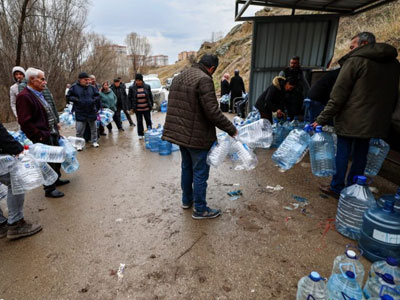
Turkish capital facing impending water crisis
Ankara is facing an ongoing water crisis as severe drought and crumbling infrastructure trigger daily outages across Türkiye’s capital, fueling widespread criticism of the city’s management. Dam reservoir levels have dropped to 1.12 percent and taps are being shut off for several hours a day.
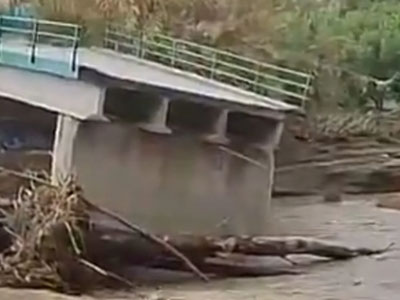
Catastrophic storm/floods slam Costa del Sol, Spain
The Costa del Sol has been left reeling after Storm Francis wreaked havoc in early January, dumping up to 8 in of rain in some areas. Spain has been whiplashed by extreme weather events, wildfires and severe droughts.
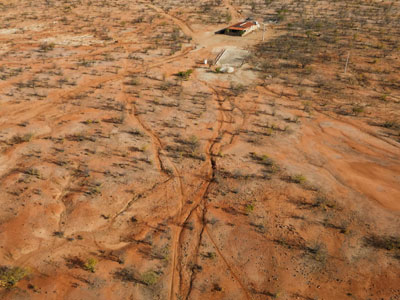
“When you plant something, it dies”
Macururé, Brazil and the adjacent region in Bahia State have been officially designated as “arid” (a desert) for the first time – for now the only desert in Brazil. The change is the result of an extended period of decreasing rainfall and a pattern of higher temperatures.