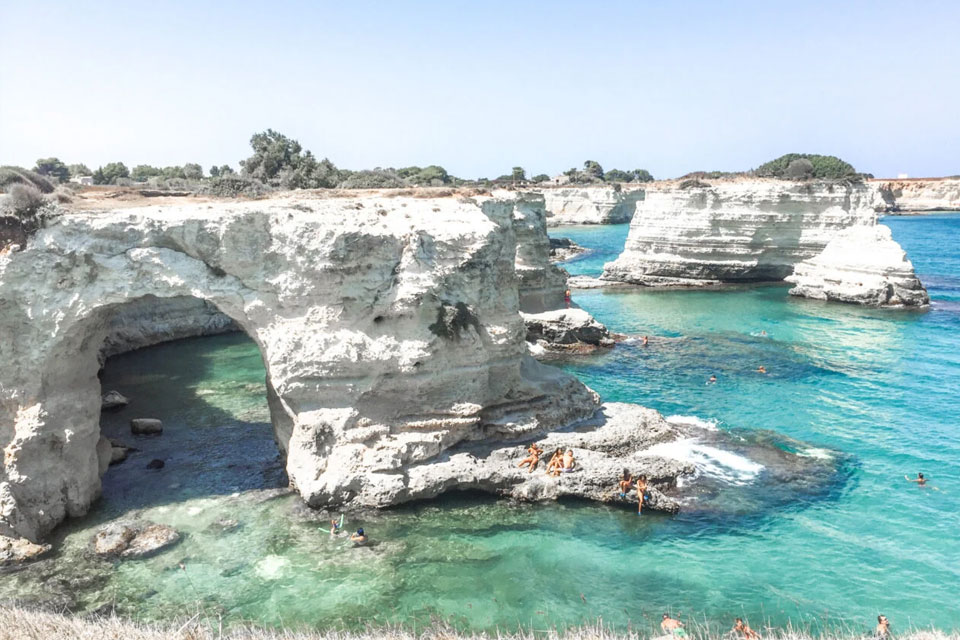
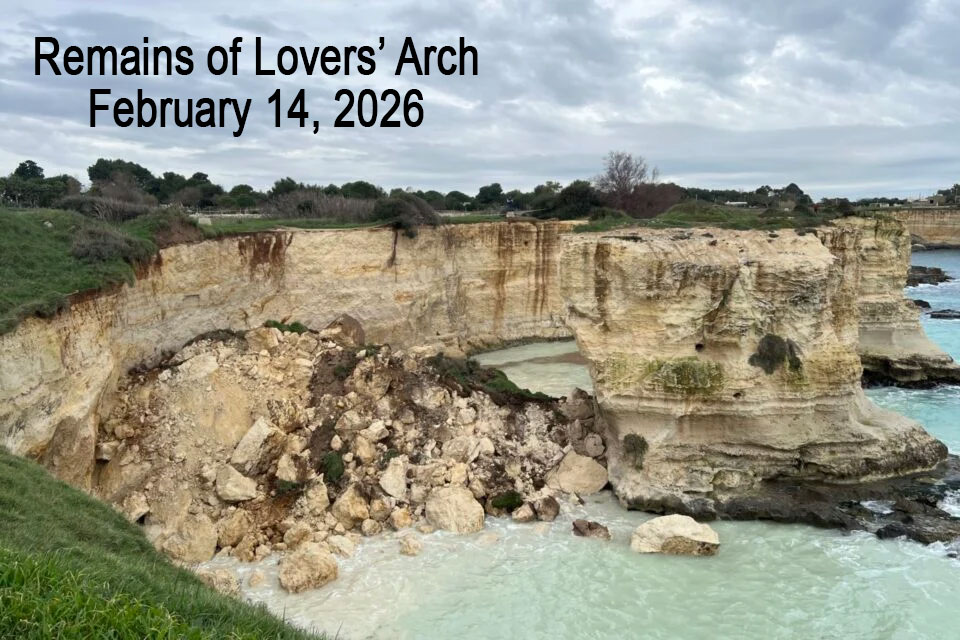
Italy’s Lovers’ Arch Collapsed On Valentine’s Day
ICONIC AND IRONIC
The Arch has been the source of legend and myth for thousands of years. Local residents believed sirens lived in the hidden grottos and also that giants tossing the limestone blocks around for fun, creating the dramatic formations. Because giants get bored too.
This phenomenon is becoming impossible to ignore as coastal regions around the world deal with a rise in sea levels that is now significantly more rapid than predicted.
.
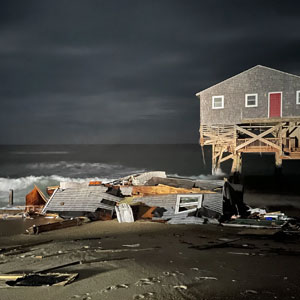
OBX Cottages crashing into the sea in 2025
Climate change is causing accelerated beach erosion and rising sea levels on the Outer Banks (OBX), leading to multiple, accelerating oceanfront home collapses, particularly in villages like Rodanthe and Buxton on Hatteras Island. Since 2020, over 25+ homes have fallen into the Atlantic, driven by stronger storms, intensified coastal erosion, and a shrinking shoreline.
- Collapsing Homes: Since 2020, numerous homes have collapsed, with a surge in incidents during late 2025 and early 2026.
- Erosion and Sea Level Rise: The shoreline is rapidly narrowing, bringing oceanfront homes closer to the water and making them vulnerable to high tides and storms.
- Affected Areas: Rodanthe, Buxton, and other parts of the Cape Hatteras National Seashore are experiencing the most acute issues.
- Environmental Damage: Collapsed homes release debris, including septic tanks, insulation, and wood, into the ocean and along miles of beaches.
- Infrastructure Risks: Coastal storms and rising sea levels threaten not just homes, but critical infrastructure on the barrier islands.
- Insurance and Future: Homeowners face immense difficulty securing insurance, leading to concerns about the long-term viability of some locations.
Despite these risks, the desire for oceanfront views continues to drive demand, with some research suggesting that subsidies for beach nourishment and rebuilding encourage continued development in high-risk areas.
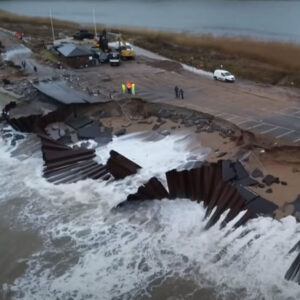
England’s slow retreat as land and infrastructure falls into the sea
- Active Collapses: In February 2026, large cliff collapses and mudslides occurred at Stonebarrow on the Jurassic Coast, forcing the closure of the South West Coast Path. Similar incidents occurred on Crimdon beach.
- Regional Damage: Winter storms (Goretti, Ingrid, Chandra) in early 2026 caused “absolute havoc” to the 630-mile South West Coast Path, with repairs costing over
. Significant damage was reported in Cornwall and Devon, including the A379 road.
- Long-term Threats: Up to 80,000 homes in England are at risk of falling into the sea by 2100 due to accelerated erosion.
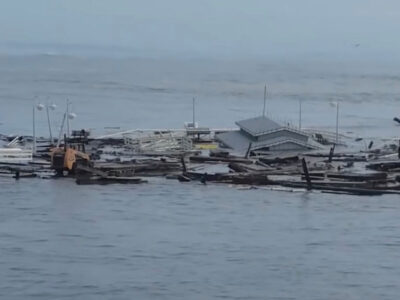
Santa Cruz wharf takes the plunge
Three workers (a project manager and two engineers) were tossed into the water when the structure gave way. Two were rescued by lifeguards on jet skis, and one managed to swim to safety; no serious injuries were reported.
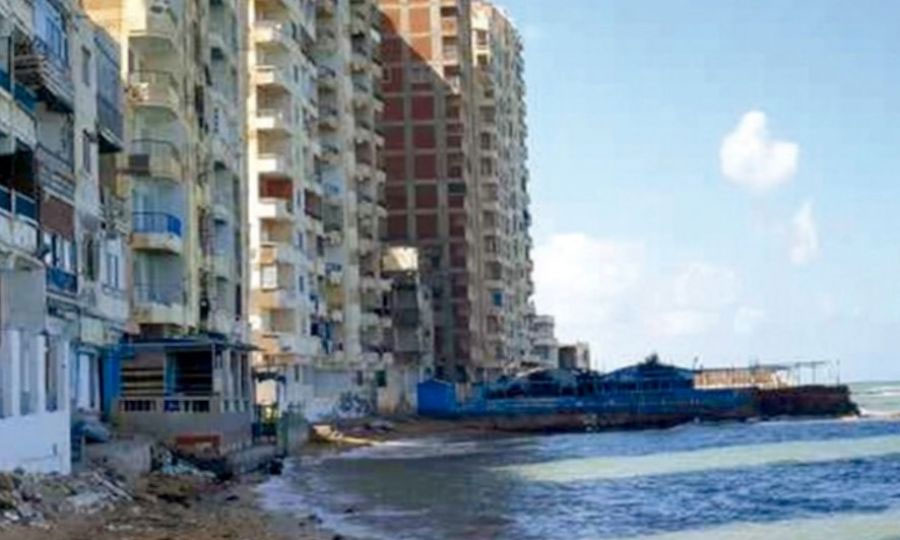
Alexandria continues to loose buildings to the sea
Building collapses have jumped from one per year to approximately 40 per year over the last decade. Rising seas push saltwater into foundations, eroding them “from the bottom up” and threatening over 7,000 structures.