Warming oceans driving jellyfish into new habitats
It’s not science fiction and it’s not an isolated incident.
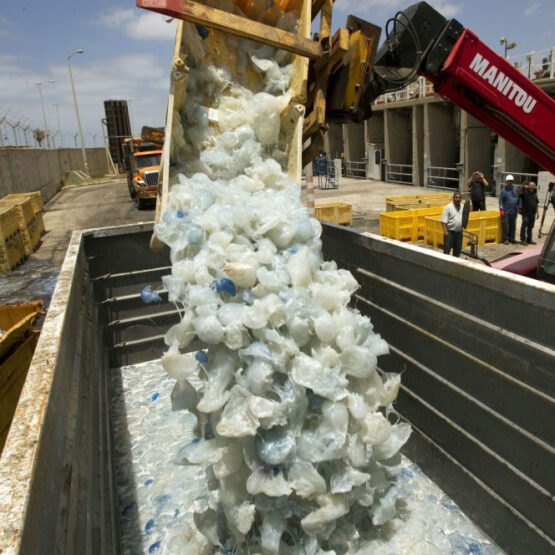
In August and September 2025, massive swarms of jellyfish caused significant disruptions at two of France’s largest nuclear power plants, Gravelines and Paluel, by clogging their cooling water intake systems.
A “massive and unpredictable” swarm of jellyfish entered the Gavelines water pumping station filters, leading to the automatic shutdown of four of the plant’s six reactors. With the other two units already down for maintenance, the entire site was temporarily nonoperational.
Less than a month later, jellyfish clogged filters at the Paluel plant in Normandy forcing shutdown of one reactor and reducing the output of another by a total of 2.4 gigawatts.
CLARIFICATION: You may encounter overwrought descriptions of these events using the term “angry jellyfish,” but these primitive marine lifeforms have neither brains, nor to the best of our knowledge, emotions.
Global Warming one of several human driven causes (But the j-fist aren’t actually angry)
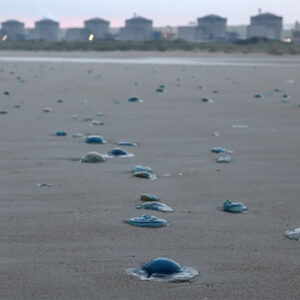
As with most climate driven environmental tragedies, the causes of global jellyfish blooms are multiple and interlocking. The one common factor is humans.
- Climate Change: Warmer ocean temperatures speed up jellyfish reproduction and increase plankton populations, their primary food source.
- Overfishing: The removal of natural predators like tuna and sea turtles allows jellyfish populations to grow unchecked.
- Invasive Species: Cargo ships can transport invasive jellyfish species, such as the
Asian Moon jellyfish , into new environments via ballast tanks.
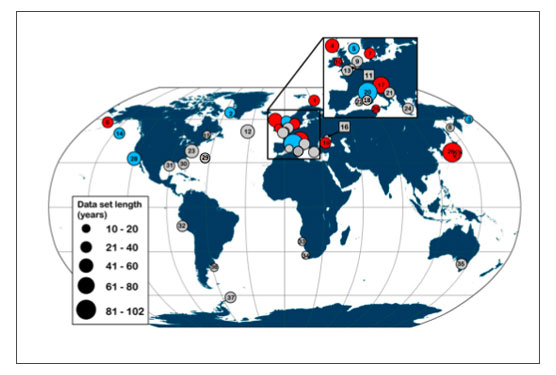
Jellyfish incursions at other nuclear plants.
- Sweden: In 2013, a swarm paralyzed a reactor at the Oskarshamn plant for three days.
- Scotland: The Torness nuclear plant 2011 | 2021.
- Philippines: 1999 Massive blackout
- Other Locations: Shutdowns or disruptions have been reported at coastal plants in Japan, Israel, and the United States..