Autumn 2026 Continues Summer’s Parade of Climate Disasters
Berkeley Earth’s newly updated data show August 2026 at +3.0°F globally — nearly 1.7°C above the late-19th-century average | Four people died and at least six remained missing after Typhoon Dujuan brought 33 inches of rain 48 hours, across eastern Japan, triggering flooding, landslides, and widespread disruption to power and transport
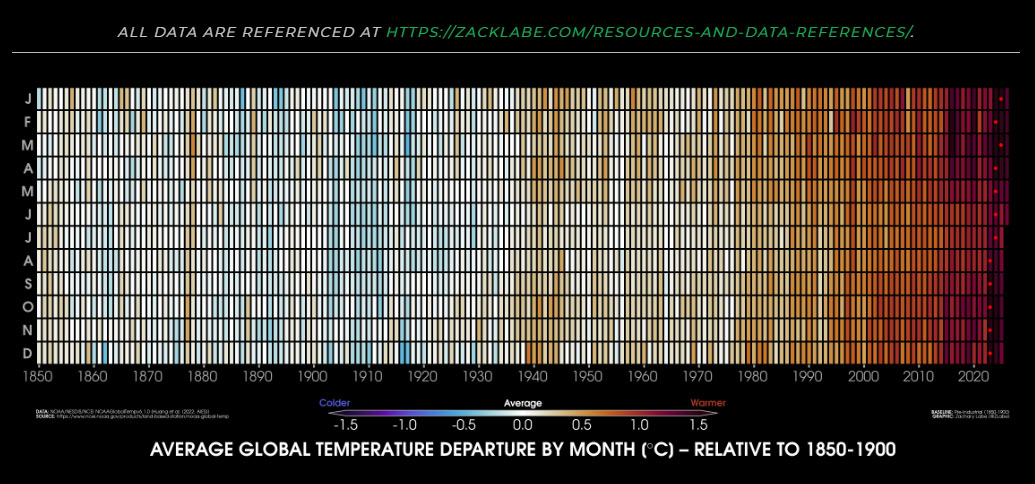
global warming events
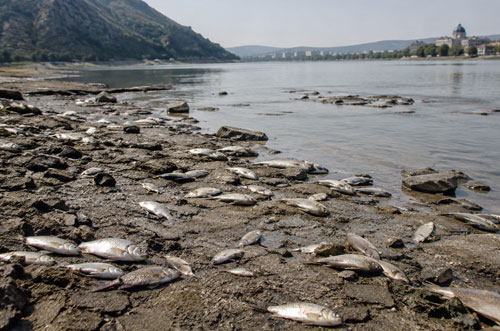
Danube record low water levels threaten fish habitats
Water levels have fallen to new record lows at gauging stations on the essential Danube River. Fishermen are particularly concerned that persistently low water levels could endanger native fish species and others that have long inhabited the river. The relentless drought has resulted in major fish die offs in the Rétszilasi Lakes and Simontornya regions. In July, a Viking cruise ship was evacuated when it ran aground. The Rhine has been similarly affected.
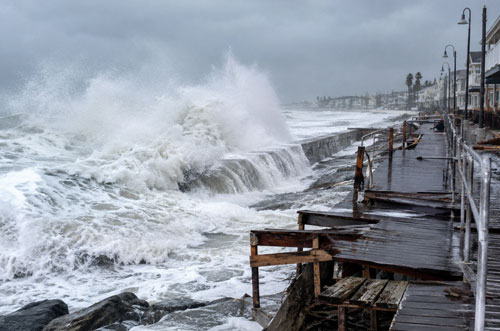
El Niño + Hurricane Rachel flood Long Beach
A state of emergency was declared as Hurricane Rachel smashed into Long Beach, CA Oct 11 with coastal flooding that overwhelmed barrier infrastructure and ripped apart a famous boardwalk. This is part of a larger and ongoing story: Americans don’t pay much attention to Pacific cyclones because they usually affect Mexico. So many have overlooked this year of numbers and intensity. These super storms were in turn driven by the super El Nino that continues to build. The world is on the brink of crossing a critical warming threshold, raising the question of whether the current conditions can be considered a new normal for future El Niños. As climate change intensifies, the big worry is that many regions will see extreme conditions even before an El Niño reaches its peak.
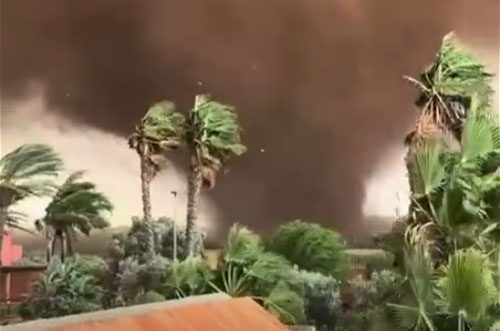
High octane twin tornadoes in Sicily highly unusual
A violent double tornado smashed through Marsala, Sicily October 9, injuring multiple people, wrecking infrastructure and overturning vehicles. Drone footage showing the aftermath revealed extensive damage to the school, with windows shattered and desks and chairs overturned.
Up until the past few years, tornadoes have been relatively rare in Europe, but as the atmosphere warms all storms have become far more extreme. This incident is notable for its unusual destructive power.
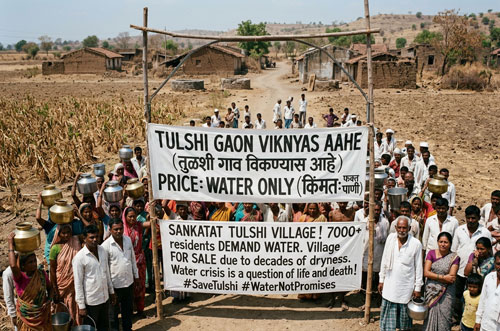
Water starved village in India for sale
Residents of Tulsi in Maharashtra’s Solapur district in India have put their village up for sale as the long time water shortage gets worse. Sporting a banner reading Village for Fales, Price: Water. The village is home to about 7,000 citizens who have become desperate as they watch their farms and wells dry up. Incomplete excavation work under the Sina-Madha Lift Irrigation Scheme has left the village without access to the water it was meant to receive, forcing residents to depend almost entirely on tankers. The village is already dependent on water tankers and that inadequate rainfall during this year’s monsoon has further aggravated the shortage.
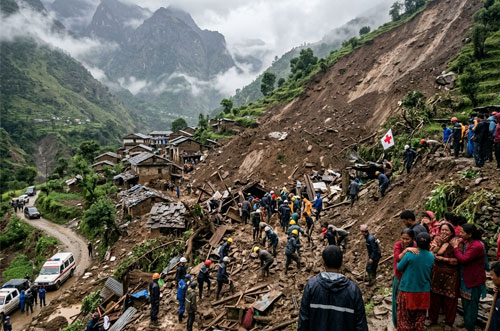
Another lethal landslide in Nepal/India kills dozens
Following August’s cataclysmic glacier outbreak in Nepal, at least 19 people have died and 10 workers left missing following floods and landslides caused by storms which have also battered parts of neighboring India. The Himalayan region was hit by extraordinary rain storm on September 25, 2026, damaging 117 homes and killing 15 people, authorities confirmed.
Three children and a woman were among those killed after being buried by a landslide which destroyed their house in Baglung district while they were asleep.
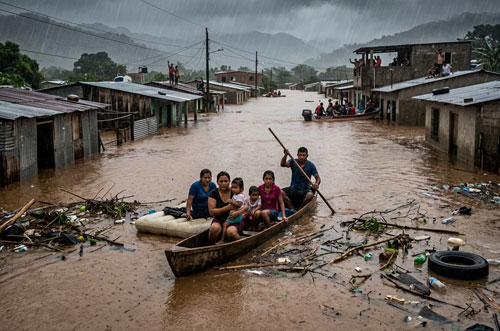
Killer torrential rains in Honduras expected to two months
Intense rains affecting Honduras have left five people dead and hundreds of families affected by floods, overflows and rising rivers in different regions of the country, while authorities warn that rainy conditions could continue for the next eight weeks .The situation remains a concern for emergency authorities, particularly because forecasts indicate that rainfall will continue for the next two months, increasing the risk of further flooding and landslides in vulnerable communities. One of the most critical situations is in Las Vegas , Santa Bárbara , where between 90 and 110 families remain isolated due to the rains. The severity of the situation has forced residents to resort to boat transportation to reach the municipal seat.
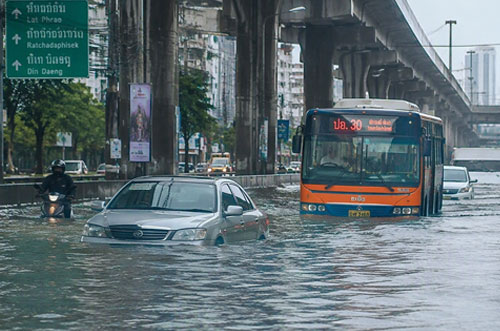
Bangkok emergency declaration under record rain onslaught
Bangkok authorities declared on Saturday a disaster across all 50 districts of the Thai capital after continuous rain caused heavy flooding. The designation, which gives local organizations authority to take action, came after the governor said almost 12 inches) of rain had fallen since Thursday.
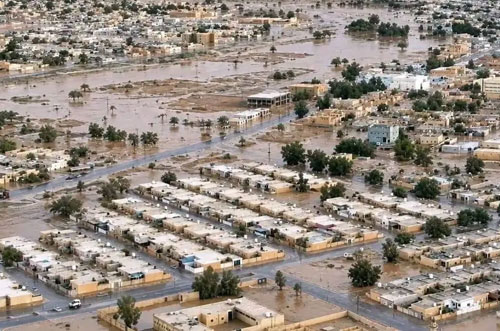
Libya flash floods kill dozens and destroy infrastructure
The Libyan government declared a national emergecny as flash floods swept across southern, western and northern Libya. Dozens drowned as cars were swept away and roads and bridges were destroyed.
Mizda and Nesma, in southwestern Libya, have faced dire conditions since Thursday. Floodwaters from overflowing valleys surged into homes, tore through roads and brought down high-voltage transmission towers, causing extensive damage to public and private property..
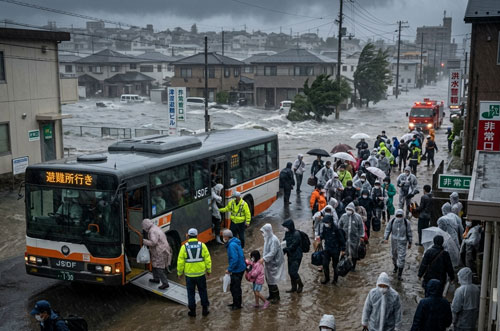
Mass Japan evacuations as Dujuan brings record rainfall
Four people died and at least six remained missing after Typhoon Dujuan brought 33 inches of rain 48 hours across eastern Japan, triggering flooding, landslides, and widespread disruption to power and transport. The Japan Meteorological Agency issued its highest-level landslide warning on Monday for several areas of the Izu Islands, including Oshima, as heavy rainfall overwhelmed the region. The rainfall measurement was the highest on record.
global warming trends
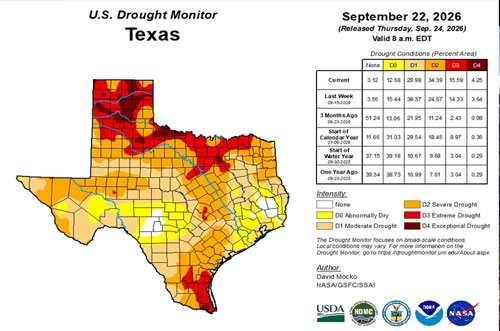
Great Plains continue to endure through a historic drought
According to precipitation measurements recorded by the US National Weather Service, large swaths of the US Great Plains continue to experience exceptional or serious drought conditions. The patchwork conditions are persisting in parts of Colorado, western Nebraska, Wyoming, and the Dakotas. This is particularly consequential because these areas depend heavily on soil moisture, groundwater, snowpack and surface reservoirs for agriculture and ranching.
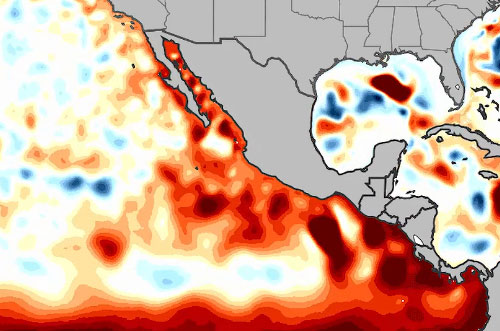
Alarming planetary scale Kelvin wave approaches CA
Concerns are mounting about an ocean phenomenon known as a Kelvin wave that could raise sea levels along the California coastline by up to a foot, as scientists say El Niño is supercharging the threat of storm surges and flooding in the coming months.
As an incredibly strong El Niño continues to develop in the Pacific, the phenomenon brings with it a strange shift in the ocean. The Kelvin wave phenomenon is created when trade winds that usually blow from South America towards Asia die down or reverse in El Niño years, setting off a massive, slow-moving slosh of water.
Kelvin waves are not like crashing waves at the beach. They are planetary in scale, spanning thousands of miles. And when a Kelvin wave kicks off, it brings with it an untold amount of warm water that slowly moves from the western Pacific, along the equator, towards South, Central and North America. The whole story in The Guardian.

El Niño bringing Zimbabwe water crisis to brink
More than a million residents in Zimbabwe’s second-largest city, Bulawayo, are facing acute water stress after years of poor rainfall. The city’s reservoirs are depleting fast and currently hold less than 50% usable water of their capacity. With the population growing and demand for water rising, the looming threat of El Niño is deepening the crisis. For most residents already struggling to secure continuous and reliable supply, every drop is becoming a matter of survival. Zimbabwe’s second largest city has endured recurring water shortages for more than a century now. Currently the city’s supply dams hold below 70% combined holding capacity.

Indian glacial lakes pose catastrophic downstream threat
In the wake of the cataclysmic glacier outburst flood in Nepal authorities have identified at least seven high-risk glacial lakes in Mago Chu basin in Arunachal Pradesh’s Tawang. An effect of rapidly melting glaciers in the Himalayas and alpine regions worldwide, the unstable lakes pose a major flood threat to villages and army camps in downstream areas. Five army personnel died in a flash flood in the Dibang valley in August
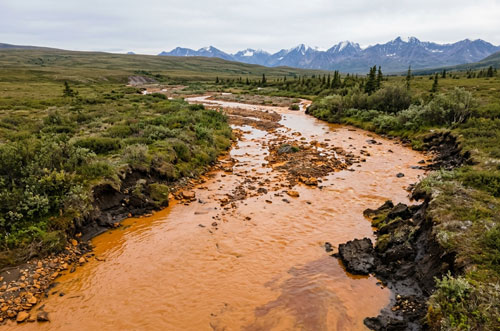
Toxic orange rivers in Alaska worse than mine waste
As the Arctic warms and tundra thaws, minerals long trapped in frozen soil are leaching into once pristine rivers, turning them orange and acidic. A study from northern Alaska found “rusting” waters to be more metallic and acidic than toxic effluent from mining. Analyzing records of water quality, researchers also determined that rusting began in the summer of 2019, the hottest summer on record in the state of Alaska. Since then, rusting has been recorded in more than 200 rivers in Alaska, as well as in waterways across much of northern Canada. There are fears that rusting may have led to the collapse of the chinook salmon fishery in the region.

El Niño is predicted to kill hundreds of thousands
The Super El Niño growing ever more powerful in the Pacific ocean is projected to generate extreme heat, violent weather and other climate extremes that will result in an estimated 450,000 deaths by February 2027.
The toll is on top of the early deaths resulting from temperatures already driven up by the climate crisis. Scientist say that although some regions will be hit especially hard, the effects will be felt from Indonesia to India, and Nigeria to the US. Many further deaths are expected from the droughts, wildfires and flooding that El Niños bring. More on El Niño.
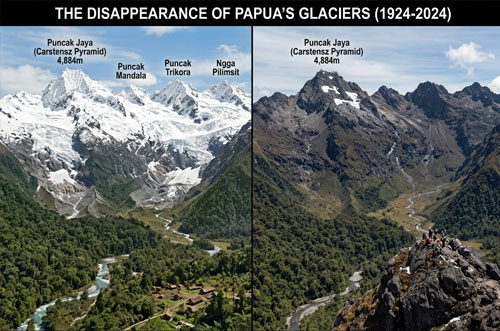
Papua’s eternal snow peak is no longer eternal
The mountains of the tropical island of Papua have been defined for thousands of years by the eternal snow of its peaks. Today, the four mountains of the Sudirman Range are almost free of snow. For a century, the peaks in this Indonesian region on the world’s second-largest island, just north of Australia, have offered scientists countless insights into the Earth’s climate history via ice core sampling. Glacier cover around the peak has shrunk from nearly 1,900 hectares (4,700 acres) in the 19th Century to about 16 hectares (40 acres) today. Almost entire glaciers have vanished within a human lifetime.
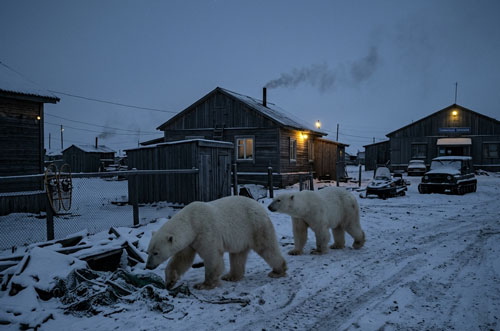
More killer bears in Siberia as warming limits food
At least six people have been killed in bear attacks in Russia’s vast Siberian region of Krasnoyarsk in a month, prosecutors said Wednesday, as an official in a neighboring region reported bears had put one town “under siege.” A Russian woman has been fatally mauled by a bear in her garden, the seventh such death in her Siberian region this month, state investigators said, amid a nationwide spate of killings that experts blame on climate change and human incompetence. Experts quoted in Russian media explained that brown bears – which have launched attacks in at least 11 regions across Russia this year, causing at least 20 deaths – have been compelled to search further for food because an unseasonably early and dry spring left a shortage of wild berries in September.
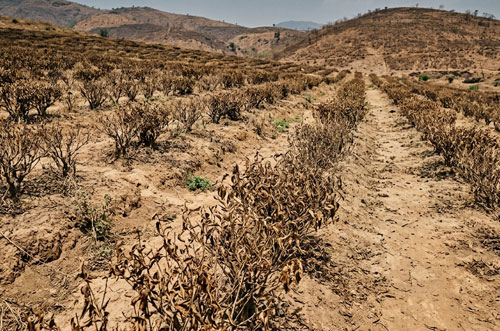
Climate shock is wrecking key tea harvest in Kenya
Climate-related disruptions in Kenya are cutting black tea harvests and driving prices up, affecting farmers in the country’s tea-growing regions.
Extreme weather disasters are threatening lives and livelihoods by wiping out crops, reducing income, and making it harder for families to afford essentials in Kenya.
In the tea-growing areas of Kericho and Bomet, farmers say conditions have veered from rain during normally dry periods to unusual heat, storms, and drought.