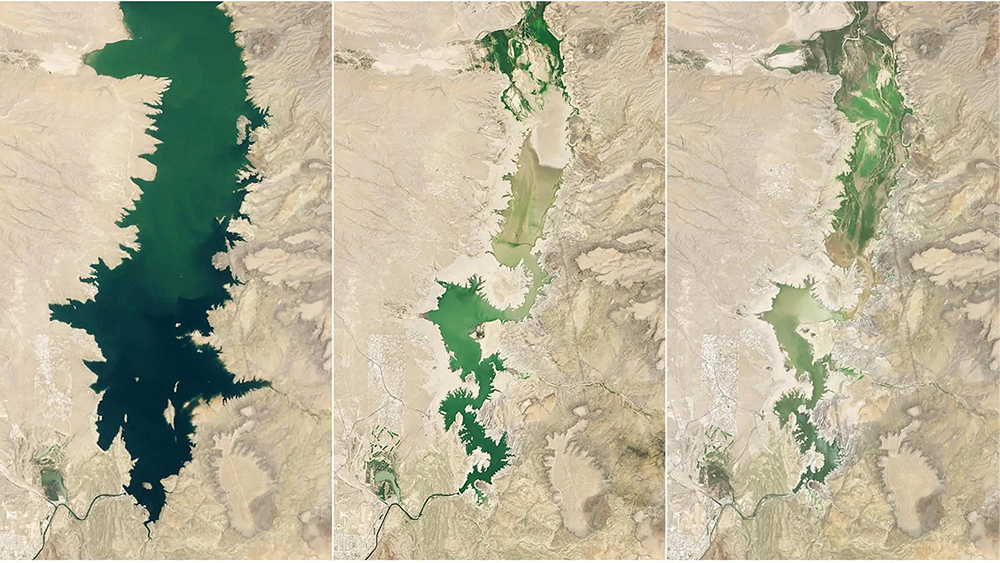
Elephant Butte Reservoir approaches empty >
The largest reservoir in New Mexico is down to 1.4% of capacity. The Middle Rio Grande and southern New Mexico depend on irrigation to sustain agricultural production. The Elephant Butte irrigation system supports farms downstream from the reservoir, including agricultural areas around Las Cruces and the Mesilla Valley. Perennial orchards are especially vulnerable. An annual crop can sometimes be abandoned for a season, but mature trees represent years of investment and may be permanently damaged if water shortages persist.
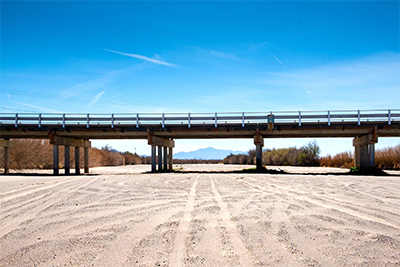
In August 2026, the National Integrated Drought Information System reported that an 82-mile section of the Middle Rio Grande Valley in New Mexico had dried up amid the severe regional drought.
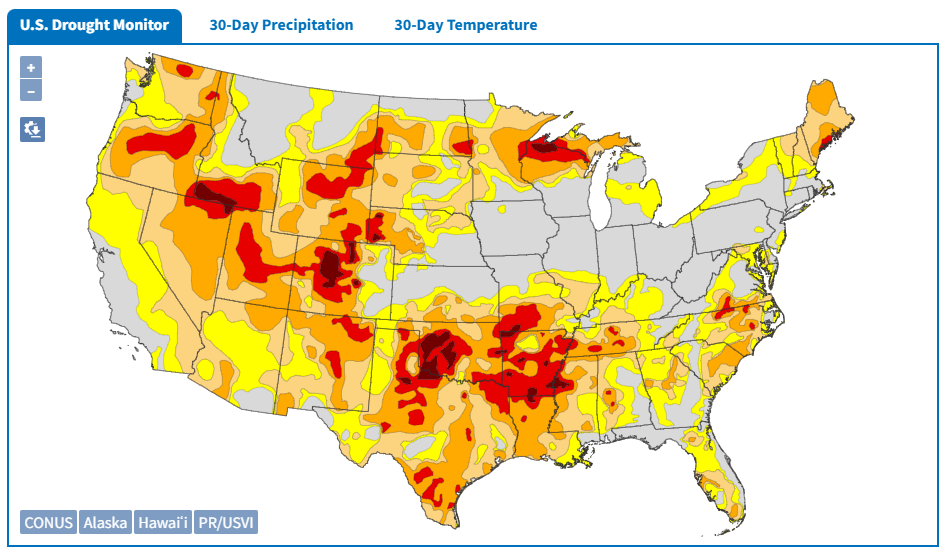
Causes:
- Runaway planetary and regional warming trends.
- Declining snowpack.
- Abuse of groundwater supplies for backup.
The Rio Grande Crisis: Running Out of Water
The Rio Grande is experiencing a severe water crisis driven by prolonged drought, rising temperatures, declining mountain snowpack, excessive water consumption and competition among agricultural, urban and environmental users.. This is particularly troubling because river flow supports cottonwood forests, wetlands, wildlife habitat and groundwater recharge, in addition to human water consumption.
The crisis extends beyond New Mexico
The most alarming sign is that sections of the river in New Mexico have dried up, while the Elephant Butte Reservoir—one of the river’s principal water-storage facilities—fell to just 1.4% of capacity in July 2026. The crisis threatens farms, cities, wildlife and the fragile network of communities that depend on the river on both sides of the US–Mexico border.
Water stored in the international reservoirs of Amistad Reservoir and Falcon Reservoir supports cities and agriculture in southern Texas and northern Mexico.
The Texas Water Development Board reported that monitored reservoirs in the Rio Grande basin were 33.8% full on October 14, 2026. This is a basin-wide figure, not the level of either reservoir individually, and it illustrates the continuing pressure on regional storage.