Warming tundra produces another surprise consequence
Over the past two decades, the landforms of the Arctic have been transforming in multiple ways, some of which are spectacular in the “tree falling in the forest sense.” That is, there is almost never anyone there to see them. Among the most visible are megaslumps which we have covered here previously and the heartbreaking Nepal catastrophe of August 2026. All of these events are related.
The most recently discovered phenomena are called permafrost detachment slides. According to a paper published Sept. 23 in the journal Geophysical Research Letters, these slides occur in areas with relatively thin permafrost. They are most likely a long-term impact of wildfire in sub-polar regions across the Arctic. In the paper. Joseph Young of the University of Alberta, this type of slide haw not been observed previously.
When permafrost is no longer “permanent,” crazy things happen:
- Once trapped GHG Methane is released into the atmosphere More
- Mountain slopes destabilize More
- Alpine Glacier lakes produce devastating flash floods More
- Rivers turns orange with toxins More
- Megaslump craters open up and expand More
- Human Infrastructure fails More
- Coastal ice shelves destabilize More
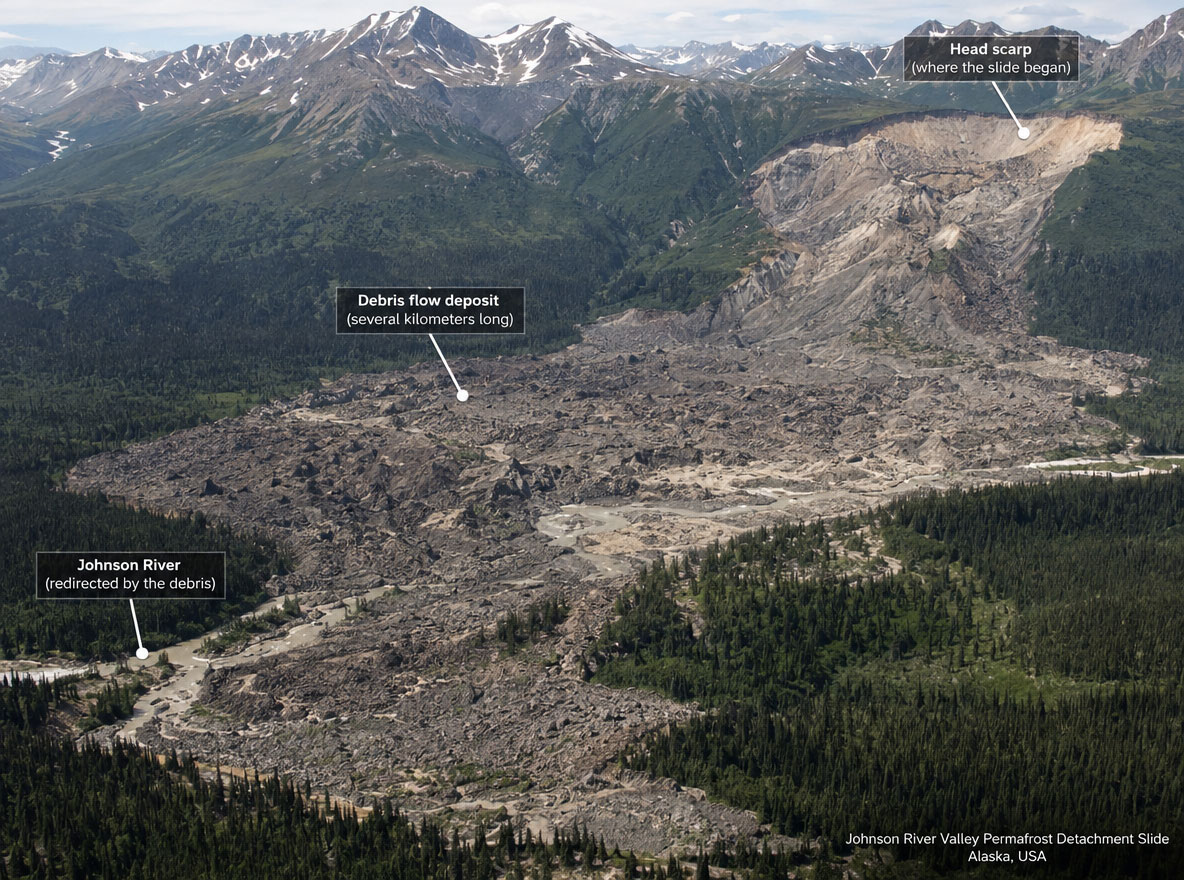

Shocking things happen when ice melts rapidly
Methane released from below
Once trapped, now not trapped
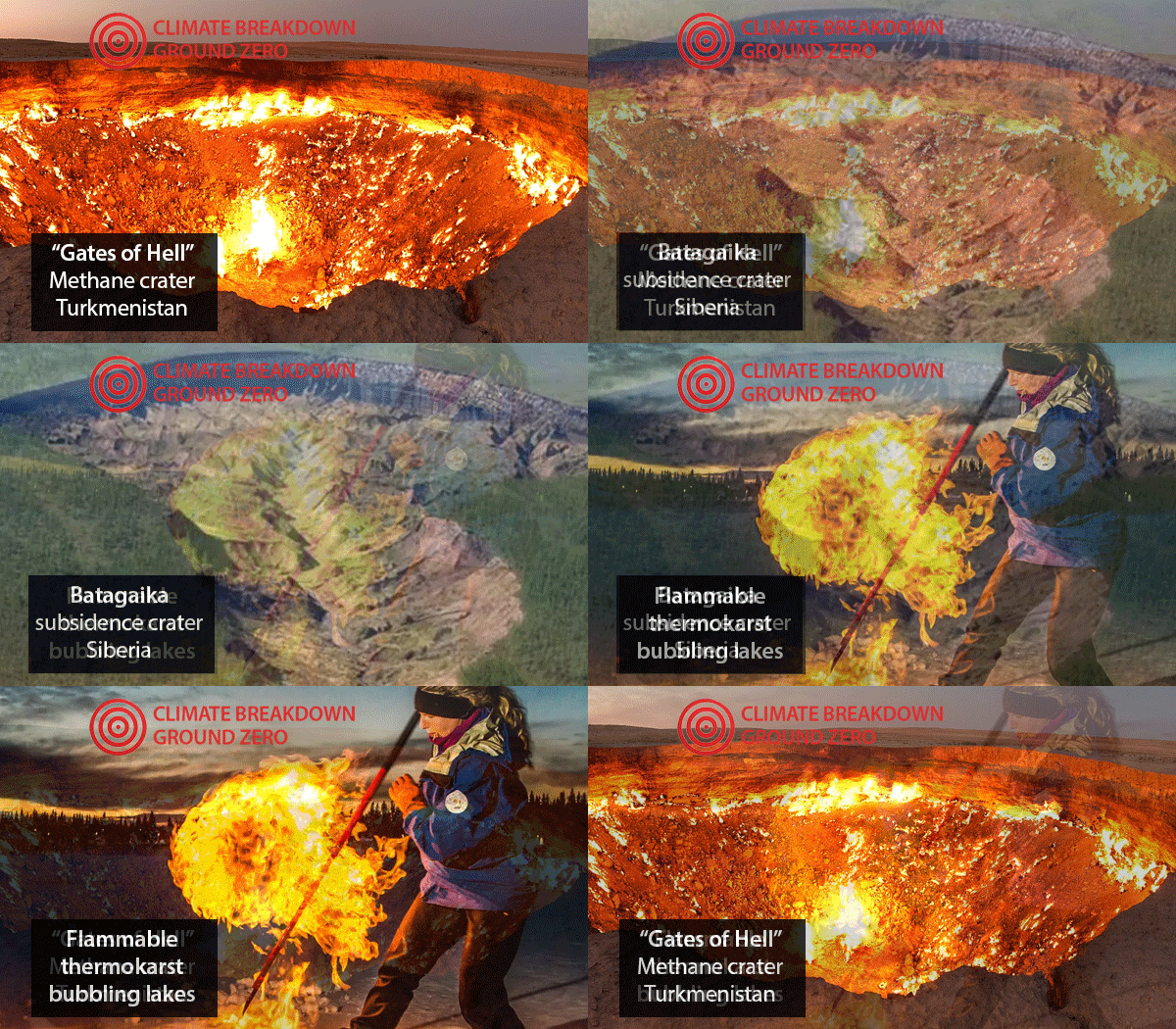
Methane (CH4) is CO2’s meaner older brother, far more destructive but with a shorter attention span. And Methane is indeed a more powerful greenhouse gas (GHG) than carbon dioxide, rated anywhere from 20 to 30 times more potent. Along with Nitrous Oxide and a few others, GHGs trap heat in the atmosphere.
Rivers run orange with toxins
Arctic rivers flow with poisons
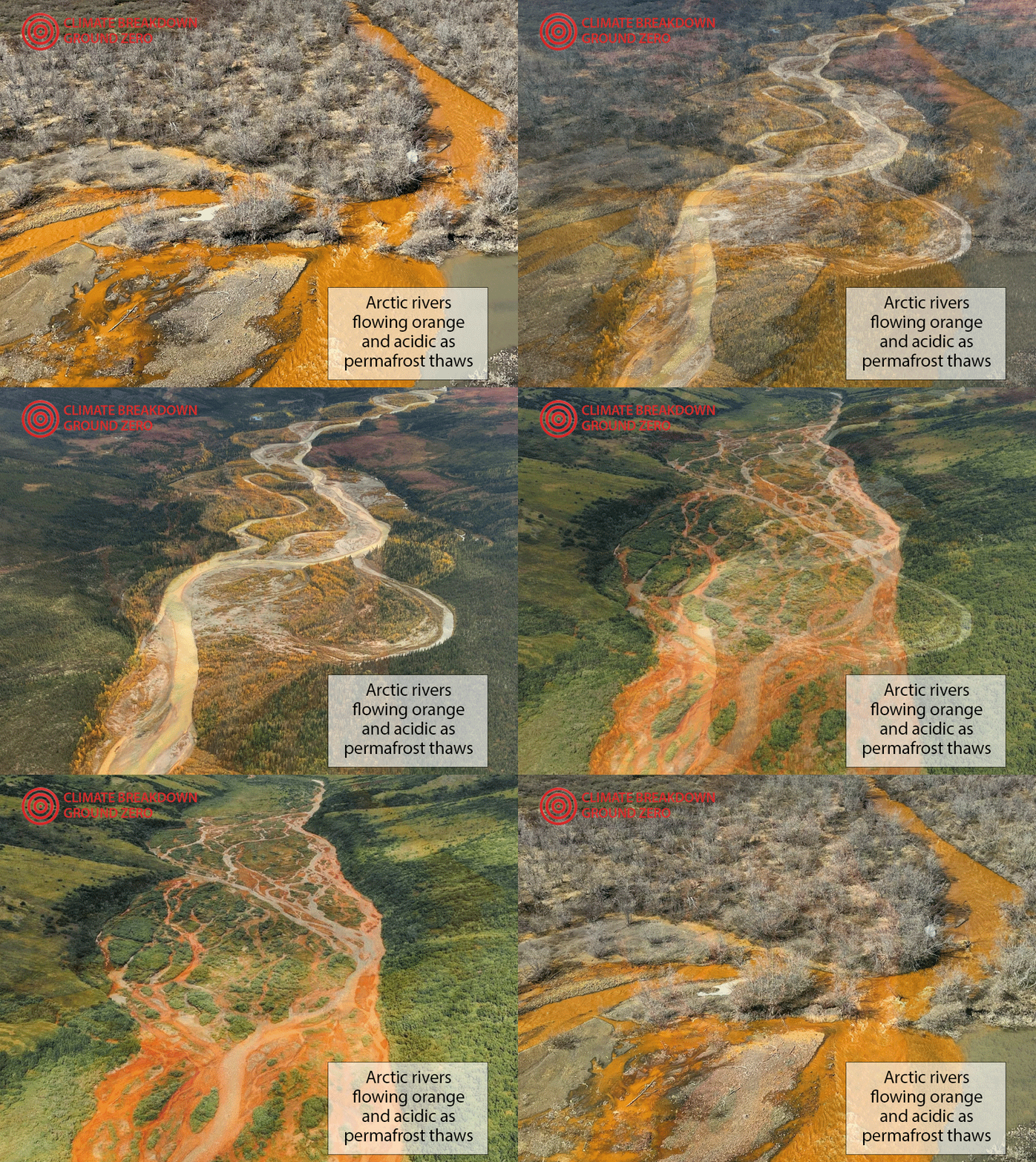
As permafrost frozen for thousands of years is thawing. The heavy metals, acids and viruses trapped below the tundra are quickly leaching into once pristine waterways. More
Collapsing human infrastructure
As tundra subsides, buildings fall

From Siberia to Alaska, roads, villages and energy facilities were built on solid permafrost. But it’s no longer solid.