The Great Atlantic Stinky Sargassum Belt
Sargassum, a floating brown seaweed that was once largely beneficial to Atlantic marine ecosystems, has become one of the most serious emerging environmental threats to tropical coastlines. Vast accumulations are washing ashore across the Caribbean, the Gulf of Mexico, Central America, northern South America, and parts of West Africa. WHEN IT DECAYS, IT STINKS.
The phenomenon has grown dramatically since 2011, when scientists began documenting a new, enormous accumulation of floating seaweed extending across the tropical Atlantic. This is now known as the Great Atlantic Sargassum Belt.
The phenomenon has grown dramatically since 2011, when scientists began documenting a new, enormous accumulation of floating seaweed extending across the tropical Atlantic. This is now known as the Great Atlantic Sargassum Belt.
The problem is not simply that beaches are becoming covered in rotting vegetation. Massive Sargassum inundations threaten marine life, coral reefs, coastal economies, fisheries, tourism, and human health. These massive blooms also illustrate how warming oceans, changing currents, and nutrient pollution can combine to destabilize marine ecosystems.
A nasty brown mass extending shore to shore across the ocean
The Sargassum belt can stretch more than 5,000 miles (8,000 kilometers), from the waters off West Africa across the tropical Atlantic toward the Caribbean and Gulf of Mexico.
Unlike most seaweeds, the two principal species involved—Sargassum natans and Sargassum fluitans—float freely at the ocean surface throughout their lives. Gas-filled structures keep them buoyant, allowing them to travel enormous distances.
In the open ocean, floating Sargassum provides valuable habitat for fish, crabs, sea turtles, and other animals. It becomes destructive primarily when excessive quantities enter shallow coastal waters or wash ashore.
Brown Tide: 2026 Crisis Level
The 2026 season was exceptionally severe. NASA reported that June 2026 brought record-high Sargassum quantities to both the Caribbean and the Gulf of Mexico. The September 30 outlook, showed that even as the blooms were subsiding seasonally, nearly every monitored region still exceeded the historical 75th percentile for September with coastal inundations were expected to continue through October.
The threat is not an uninterrupted increase every month. It is a recurring, highly seasonal crisis whose major bloom years have become exceptionally large and dangerous.
A Major Environmental Threat
Decomposition creates a public health hazard. When algae begin to decay they produce hydrogen sulfide (H₂S) and ammonia. Some stranded masses contain arsenic.
Accumulation of Toxins Sargassum affects aquatic species and their ecosystems by accumulating marine debris, including microplastics, and leaching heavy metals, pesticides, and other pollutants, some of which may be generated from its decomposition.
Coastal oxygen starvation: Dense Sargassum mats block sunlight and interfere with oxygen exchange. As large accumulations decompose, microorganisms consume dissolved oxygen, potentially creating hypoxic conditions. The consequences include Fish and invertebrate deaths, damage to seagrass meadows and coral reefs, smothering of bottom-dwelling marine organisms and obstruction of sea turtle nesting beaches and hatchling access to the sea.
Once healthy coastal ecosystems can experience substantial biological deterioration.
Threat to coastal infrastructure: Accumulations can clog cooling-water intakes, interfere with desalination systems, and obstruct harbors. For islands dependent on desalination for drinking water, the risks extend beyond tourism and ecological damage.
Threat to Global Tourism
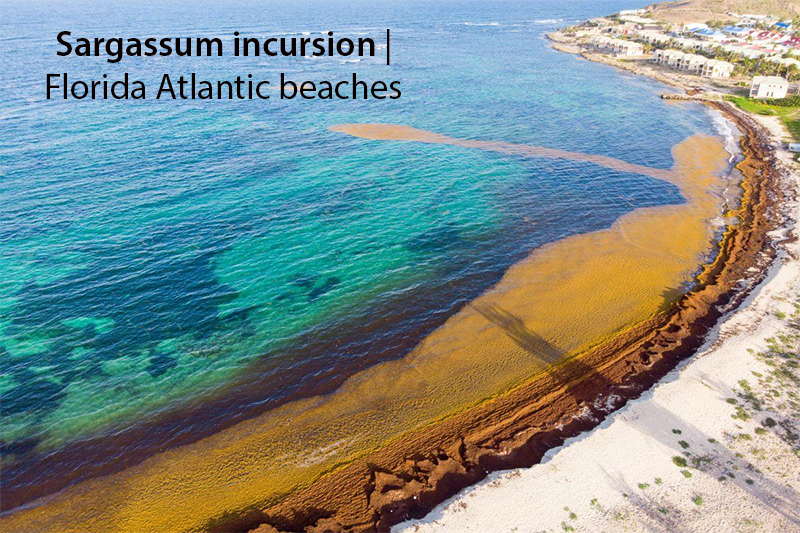
Brown tides threaten the Florida Keys, Miami-Dade and Atlantic beaches and their tourist economies, as NASA now updates the situation on a daily basis. Florida’s east coast and Keys experienced significant inundations in 2026.
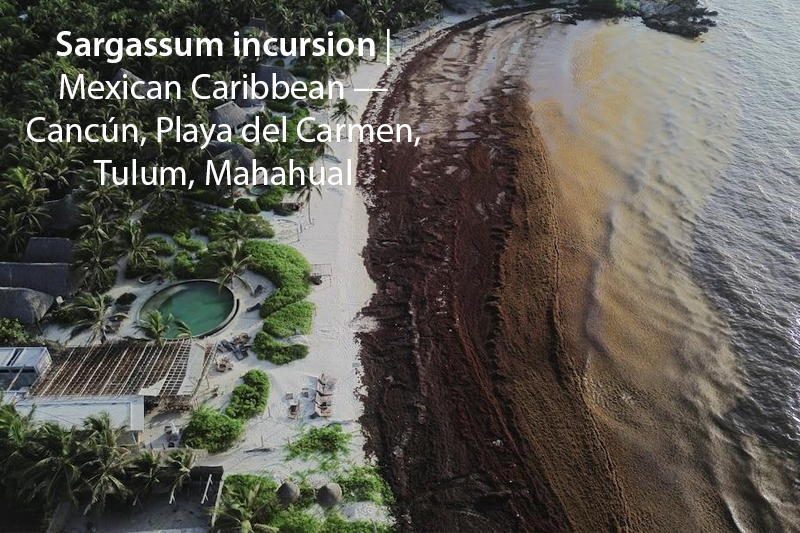
Mexico’s Caribbean coast is among the world’s most economically vulnerable locations. Repeated inundations threaten the Riviera Maya tourism industry, require extensive beach cleaning, and damage sensitive coastal habitats. Other key tourist areas in the Western Hemisphere include Dominican Republic — Punta Cana, Bávaro and eastern beaches; Barbados, Martinique, Guadeloupe, Saint Lucia and the Grenadines. Reefs, mangroves, fishing grounds and coastal tourism are also at risk in the Western Caribbean. Satellite measurements for September 2026 showed substantial offshore Sargassum in Honduran, Jamaican and Cuban waters.
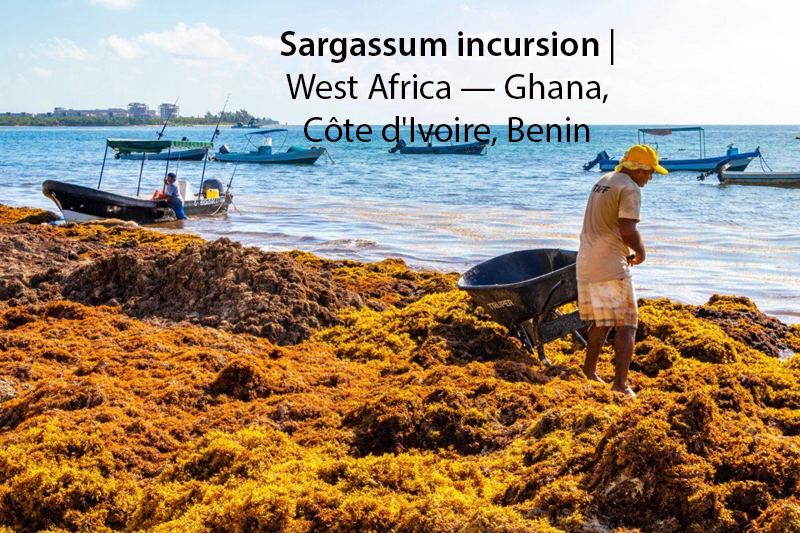
Across the ocean, West Africa nations such as Ghana, Côte d’Ivoire and Benin are swamped by
recurrent brown seaweed masses that disrupt artisanal fishing and coastal livelihoods.
The inundations not only foul beaches, they threaten near-shore water quality.
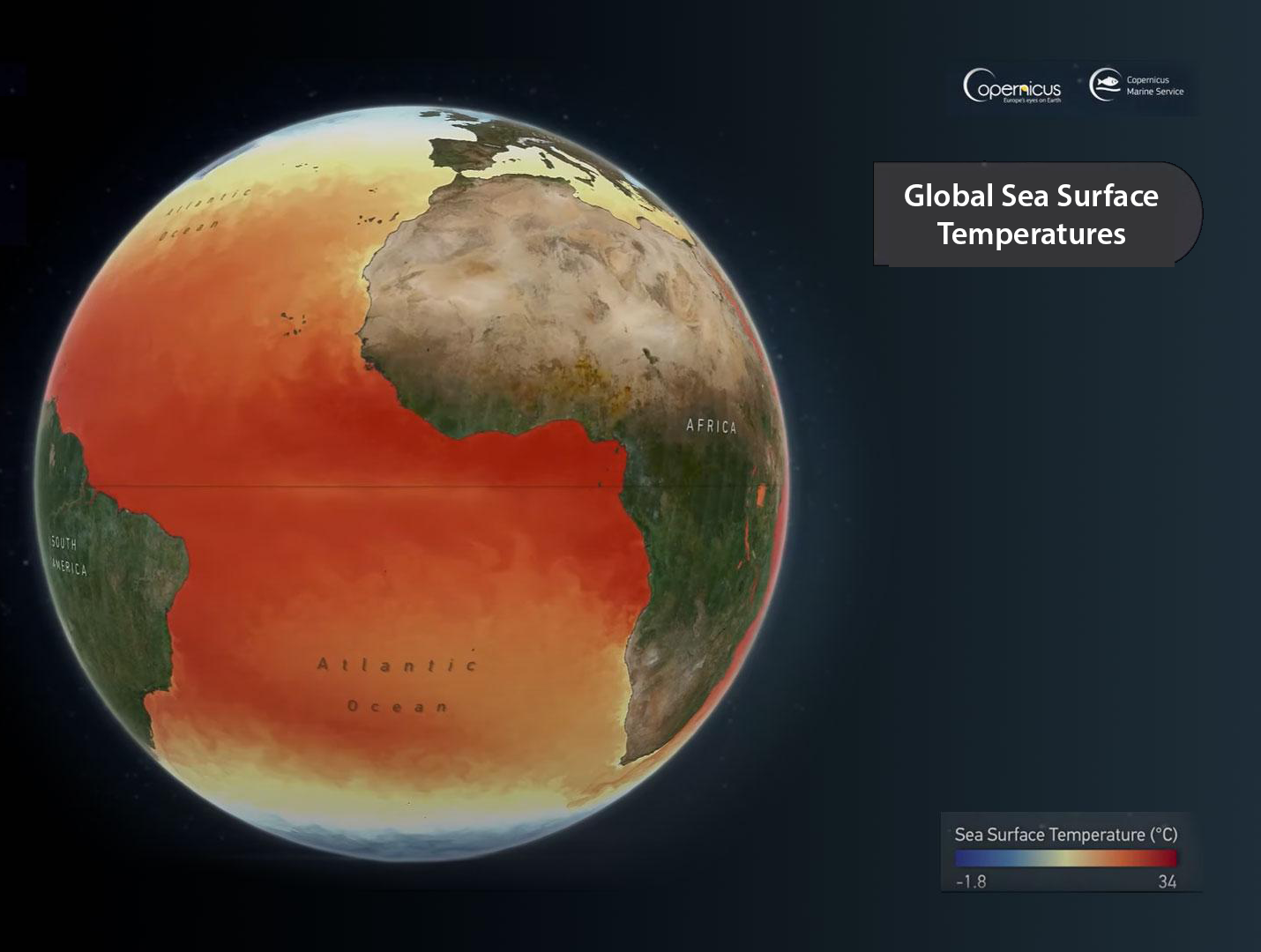
Causes: Smells Like Global Warming
Rising ocean temperatures and climate variability
Warming oceans are triggering Sargassum blooms because temperature affects Sargassum growth, survival and distribution. Climate-driven changes in rainfall, ocean circulation and nutrient delivery also influence blooms.
Changing ocean circulation
Equatorial currents, winds and circulating ocean eddies transport and concentrate floating algae. All of these processes have been severely messed up by global warming. These forces help determine whether Sargassum remains offshore or reaches vulnerable coastlines.
Nutrients for hungry seaweed
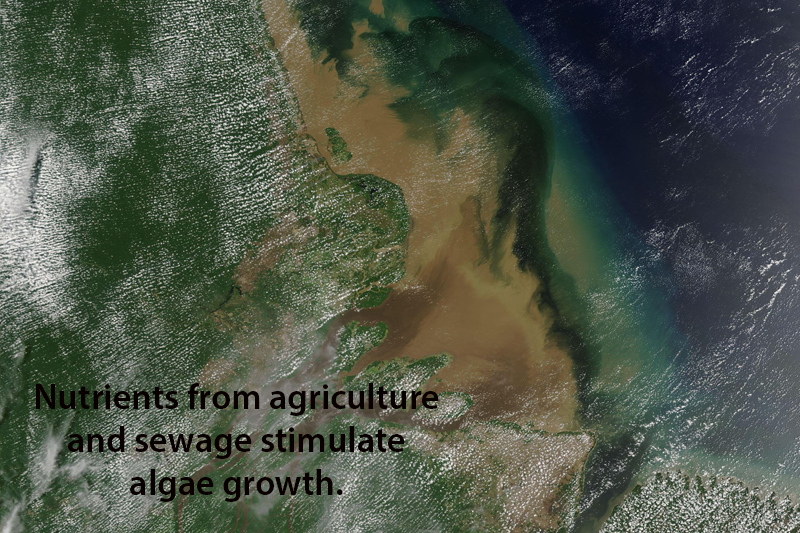
Nutrients carried by rivers, including the Amazon and Congo, also stimulate algae growth. Agricultural fertilizers, sewage and other sources of nutrient pollution contribute. Their relative importance varies by region and season, but it’s all driven by human behavior.