Global sea-level rise is driven by three major processes.
Unchecks extraction of groundwater for irrigation and industrial use turns out to be an important missing factor in past estimates of sea-level changes. It isn’t good news for the future.
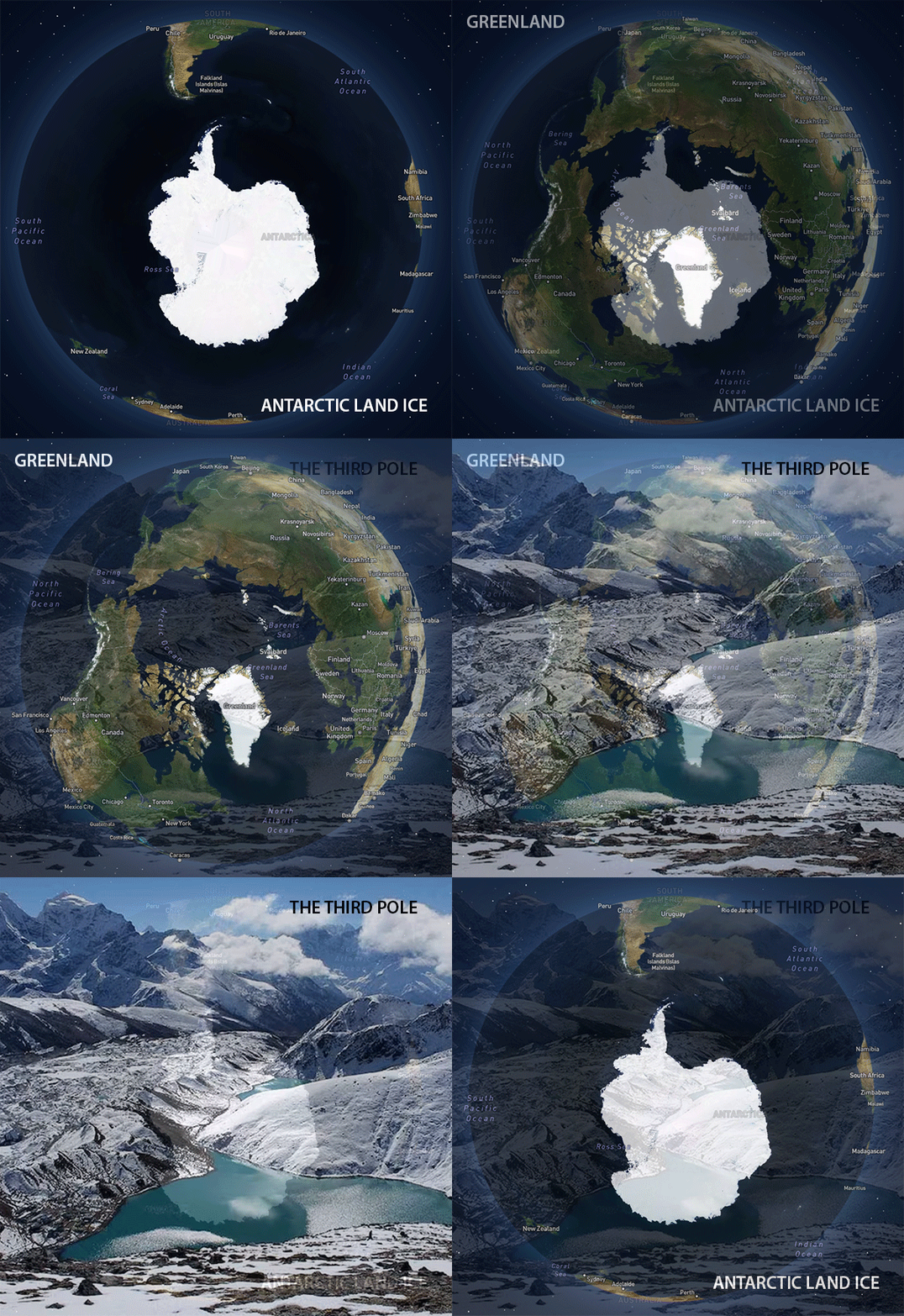
#1 Melting of glaciers and ice sheets ~ 66%
Ice currently on land adds new water to the ocean when it melts or flows into it.
Two major components:
Greenland and Antarctic ice sheets
- Greenland loses ice through surface melting and increased glacier discharge into the ocean.
- In Antarctica, warmer seawater melts floating ice shelves from below. This is negating their restraining effect on glaciers, allowing more land-based ice to flow into the ocean.
Mountain glaciers
- Glaciers are shrinking on virtually every continent.
- Meltwater eventually reaches the ocean.
- Collectively, glaciers make a significant contribution to sea-level rise.
Together, land-ice loss accounts for about two-thirds of global sea-level rise.
Important distinction: Melting floating sea ice in the Arctic and Antarctic makes only a small contribution to sea levels rise because it is already floating in the ocean. It is melting land ice that substantially raises sea level.
#2 Thermal expansion ~ 33%
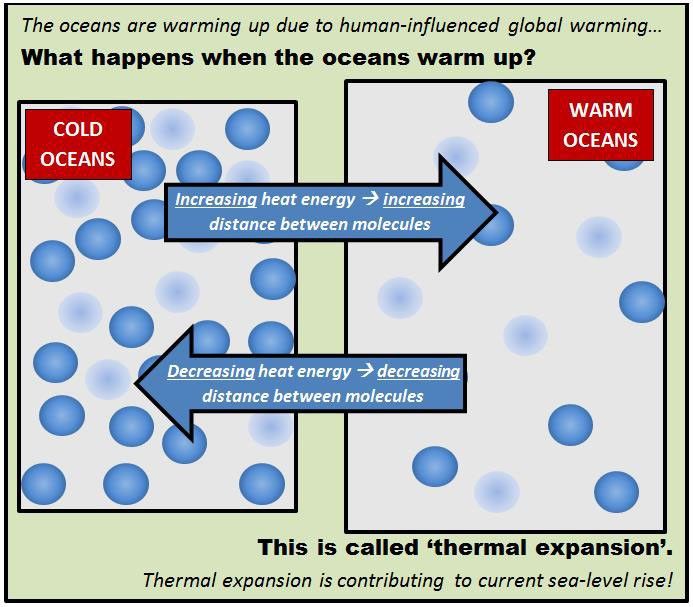
As the ocean absorbs heat from global warming, seawater expands. This is called thermal expansion.
- Water molecules move farther apart as their temperature rises.
- The amount of water doesn’t increase, but its volume does, pushing the ocean surface upward.
- The ocean absorbs more than 90% of the excess heat accumulating in Earth’s climate system.
- Thermal expansion currently accounts for roughly one-third of global sea-level rise.
This process is particularly important because warming penetrates progressively deeper into the ocean.
.
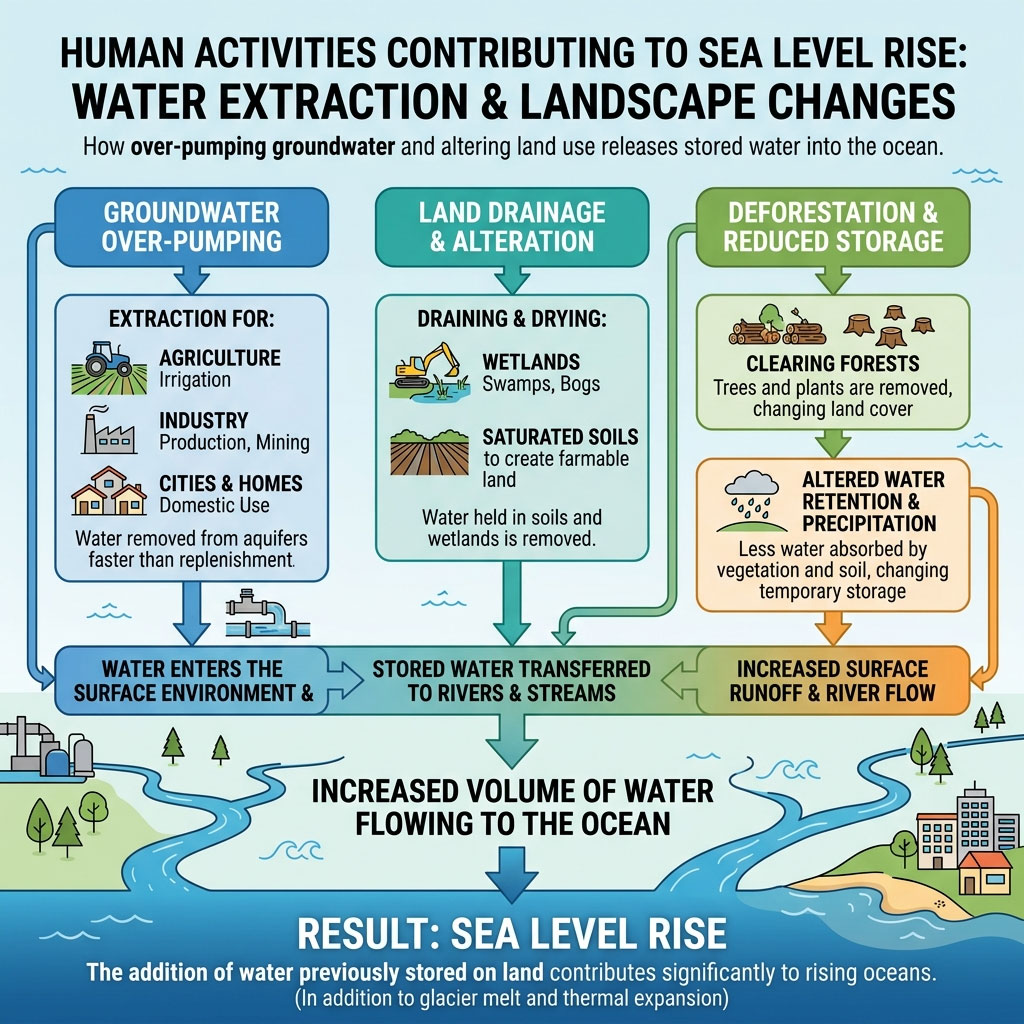
#3 Human extraction diverts more water into the oceans ~ 1%
- Groundwater pumping: water extracted from aquifers for agriculture, cities and industry can eventually reach the ocean.
- Drainage of wetlands and soils: stored water can be transferred to rivers and ultimately the ocean.
- Deforestation and changes in precipitation: alter how much water is temporarily stored on land.
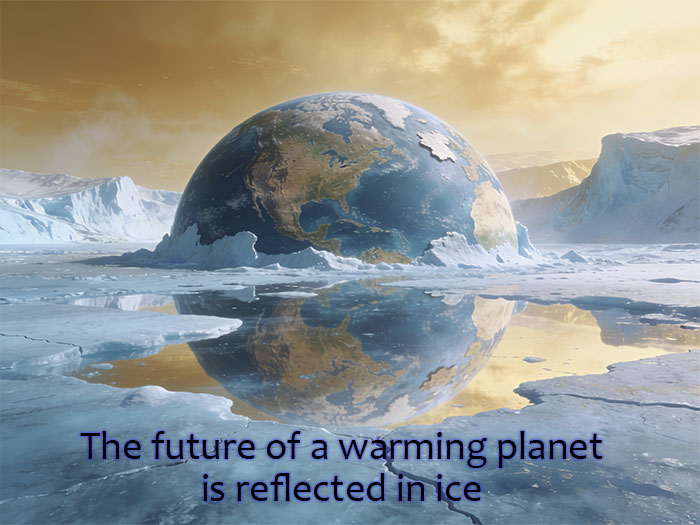
The words of the prophets are written in ice.
The interaction between global ice stores and climate is a critical factor in understanding what’s happening and what’s going to happen.
- Albedo reflectivity feedback
- Permafrost collapse \ methane feedback
- Glacier Lake Outburst Floods
- Alpine mountain slope collapse triggered by melting ice “glue”
- The Third Pole and the threat to Asian fresh water supply
- The affect of fresh water melt on the Atlantic Meridional Overturning Circulation (AMOC)